Louis Argenta
"This device allowed us to treat patients who couldn't be treated before. It allowed us to let these patients go home with their family."
Louis Argenta and Michael Morykwas co-invented the medical device known as Vacuum Assisted Closure (V.A.C.). Using controlled suction to draw excess fluid from a wound, it promotes the wound’s closure and encourages the growth of new tissue. V.A.C. therapy has been used to help millions of patients worldwide by treating a wide range of difficult-to-heal wounds, from surgical wounds to diabetic ulcers and burns.
Argenta was born on Dec. 28, 1942, in Detroit to Italian immigrant parents. “I think my parents inspired my brothers and me very early in life to accomplish something,” Argenta said in an interview with the National Inventors Hall of Fame®. His parents, who had only received a few years of education in their youth, taught him both the value of learning and “the dignity of work.” Argenta shared, “They never really had a formal education. And I think it was super important for my family to get us an education, and then to do something meaningful in life.” Argenta graduated from Detroit Catholic Central High School as valedictorian and class president in 1961.
At the University of Michigan, Argenta earned his bachelor’s degree in zoology in 1965 and then entered the School of Medicine. After earning his medical doctorate in 1969, he completed a surgical internship at the University of Michigan and then served in the U.S. Navy Medical Corps for three years, including two years at sea, during the Vietnam War.
When Argenta returned to Michigan, he completed his general surgery and plastic surgery residencies. He later was awarded a craniofacial fellowship in Paris, France, with Paul Tessier, who was the world’s foremost craniofacial surgeon. Operating day and night for six days a week, Argenta gained immense experience treating soldiers who had fought in the Iran-Iraq War and sustained severe facial injuries.
Following his fellowship, Argenta spent seven years with the University of Michigan surgical faculty, and in 1988, he accepted an invitation to establish a department of plastic surgery at Wake Forest University as professor and chairman. This would become one of the leading plastic surgery programs in the U.S.
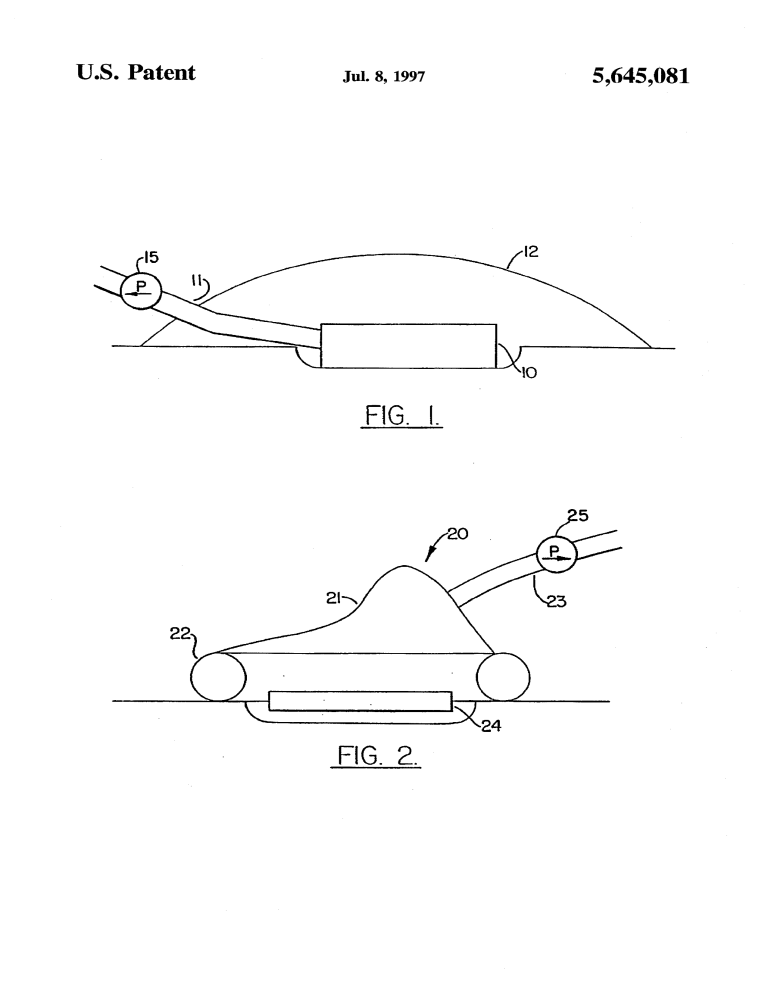
At Wake Forest, Argenta specialized in treating the most challenging cases. One of these cases led to the development of the V.A.C. system. Argenta recalled that one night in late 1988, he could not sleep as he contemplated the treatment of a particular patient. This patient had a massive wound that had become infected and could not be sutured, and it was expected that he would soon die. Argenta began to think about using a vacuum apparatus to pull the wound together, and he created a small sketch of his idea in the margins of a book he had been reading.
Argenta brought this new idea to Morykwas, a full-time researcher in the lab at Wake Forest, to begin developing a prototype. “I hired Mike [Morykwas] and Mike started doing some things that were remarkable. You could tell he was brilliant,” said Argenta. “I talked to Mike about making this machine, and the next day when I came out of the operating room he had all this crazy stuff put together with flasks and suction pumps, and we put it on the patient that night.” This first prototype worked, and the patient’s condition improved within days.
Argenta and Morykwas began testing the idea in a swine model to understand the effects of subatmospheric pressure on blood flow within the wound area, as well as its effect on the formation of granulation tissue – an important sign of healing. Their experiments showed that both blood flow and granulation tissue growth increased substantially, and the levels of bacteria decreased significantly within several days. In a study involving 300 human patients, 296 experienced favorable wound healing following V.A.C. treatment.
Patented in 1997, Argenta and Morykwas’ revolutionary V.A.C. wound care system consists of an open-cell foam dressing, a semipermeable adhesive cover, a fluid collection system and a suction pump. It manages open wounds by applying either continuous or intermittent subatmospheric pressure to the wound surface and promotes healing by pulling the wound’s edges together with evenly distributed suction. By effectively removing excess wound fluids and infectious materials, it also reduces the risk of infection.
The V.A.C. has been used to treat more than 20 million patients whose wounds would have otherwise not healed or might have healed over very long periods. Nearly all U.S. military personnel with traumatic extremity wounds in Afghanistan and Iraq returned to the United States with the V.A.C. in place. “This device allowed us to treat patients who couldn't be treated before,” Argenta said. “It allowed us to let these patients go home with their family.” The V.A.C. is considered one of the most important advances in wound treatment in the past 50 years.
In recognition of his lifesaving work, Argenta has received awards including the Achievement Award for Clinical Research from the American Association of Plastic Surgeons in 2013, the Wake Forest University Medallion of Merit with Morykwas in 2015 and the Jacobson Innovation Award from the American College of Surgeons in 2016. In 2017, he and Morykwas founded Renovo Concepts Inc. to develop devices for treating brain and heart injuries. For more than 30 years, he and his family have traveled throughout the world on medical missions, providing a range of vital treatments in remote and low-resource areas. Reflecting on his many rewarding experiences, Argenta said, “I always say that I've been able to live two or three lifetimes in my one lifetime, and I'm thankful for that.”