Feng Zhang
"I definitely want to solve more problems and bring more solutions to the world."
Feng Zhang has invented transformative technologies to improve human health, including pioneering the use of engineered CRISPR-Cas9 systems for genome editing in human cells, and engineering and developing CRISPR-Cas12 and Cas13 systems. He also has co-founded several companies to commercialize these groundbreaking technologies.
Born Oct. 22, 1981, in Shijiazhuang, Hebei Province, China, Zhang came to the U.S. at age 11. In an interview with the National Inventors Hall of Fame®, he said, “I'm an immigrant — I moved here when I was young, and I really benefited from the education and opportunities available in America.” Growing up in Des Moines, Iowa, he was driven to make a positive impact. “My mother would always emphasize that I should choose to do something useful for the world; to live a life that is meaningful and is adding something to the world, rather than just consuming from the world,” Zhang explained. “That has been one of the strongest guiding factors for me.”
When he was a high school sophomore, Zhang volunteered at a gene therapy lab in a local hospital. There, he received training in molecular biology techniques and used viruses to express green fluorescent protein (GFP) in human melanoma cells. This led him to compete in a state science fair in which he showed that GFP can protect cells from DNA damage from ultraviolet light. Also in the gene therapy lab, Zhang studied how HIV, a retrovirus, is constructed — a project that led him to earn third place nationally at the 2000 Science Talent Search.
When he enrolled at Harvard University, Zhang first focused on viruses, and advancing the treatment of mental illnesses. After earning his bachelor’s degree in chemistry and physics in 2004, he entered Stanford University, where he worked on optogenetics, a method of using light to control brain cells. “Optogenetics is a technology we developed to allow us to figure out what different types of cells in the brain do,” Zhang explained. This technology has paved the way for researchers to study brain circuitry and signaling pathways at the cellular level.
After earning his doctorate in chemistry from Stanford in 2009, Zhang returned to Harvard and spent a year as a Junior Fellow studying brain development. In 2011, he joined the Massachusetts Institute of Technology (MIT), where he started his own lab, and he became a core member of the Broad Institute of MIT and Harvard. Inspired by a colleague’s presentation on enterococcus bacteria, Zhang began researching CRISPR (Clustered Regularly Interspaced Short Palindromic Repeats), and he immediately recognized its potential to be engineered for genome editing. “CRISPR is a naturally occurring system in bacteria,” Zhang explained. “And bacteria use it to defend against virus infections. What was exciting about it to me, though, was the way that it targets DNA. If we could take the components of CRISPR systems and engineer them and adapt them to work in human, animal or plant cells, then that would allow us to edit the genome.”
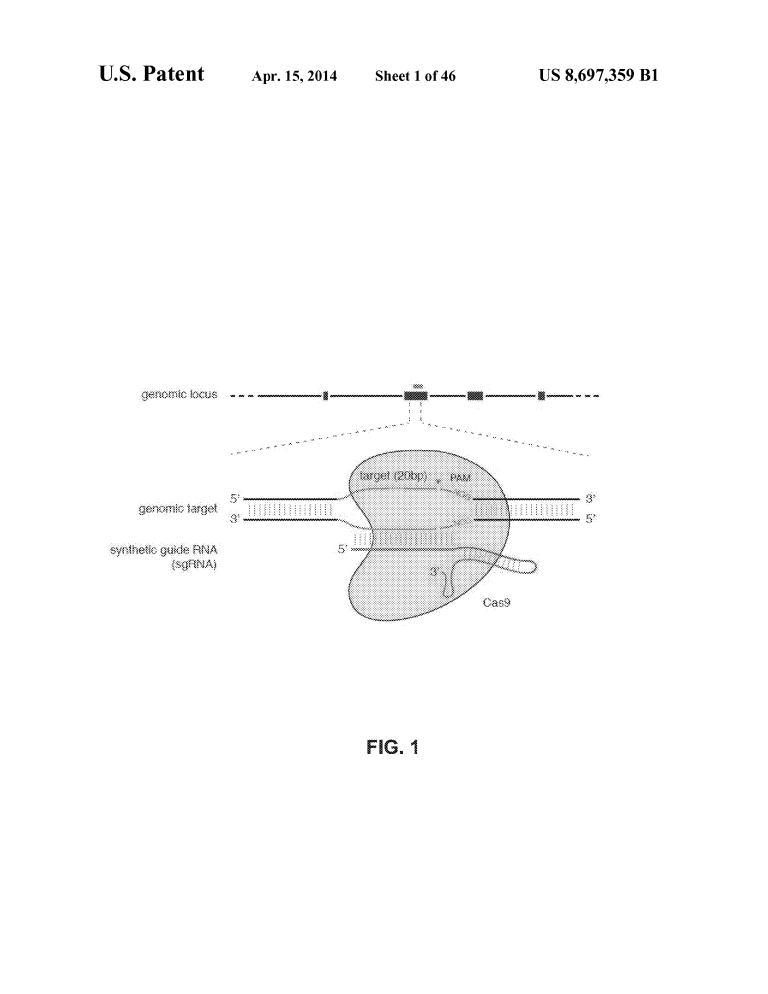
In 2013, Zhang published a groundbreaking paper in the journal Science demonstrating the first use of engineered CRISPR-Cas9 systems to edit genomes in living mouse and human cells. Later, comparing the simplicity of CRISPR-Cas9 genome editing to using the search function in a digital document, Zhang said, “CRISPR is one of these search functions, where if you give it a piece of RNA that matches a sequence in the genome you want to target, then Cas9 will go right to that spot and allow you to start to make changes.”
Following his engineering of CRISPR-Cas9 systems for use as a genome editing tool in human cells, Zhang extended the CRISPR toolbox with additional systems including CRISPR-Cas12 systems for expanded DNA-targeting capabilities, and Cas13 systems for precise RNA editing. Zhang also pioneered new methods to deliver these engineered systems into cells. He and his lab continue to refine and improve upon these technologies.
“If you want to realize the impact of these technologies, it’s really important to develop products based on them, because that’s how [they] can eventually reach the real world,” Zhang said. To accomplish this, he has co-founded companies including Editas Medicine, Arbor Biotechnologies, Beam Therapeutics, Pairwise Plants, Sherlock Biosciences, Aera Therapeutics and Moonwalk Biosciences.
To advance research, Zhang widely shares his reagents and expertise. Through the nonprofit repository Addgene, by 2023 over 75,000 samples of Zhang’s reagents had been shared with researchers in more than 79 countries. He also has trained scientists from around the world in online research forums, in his workshops and in his lab.
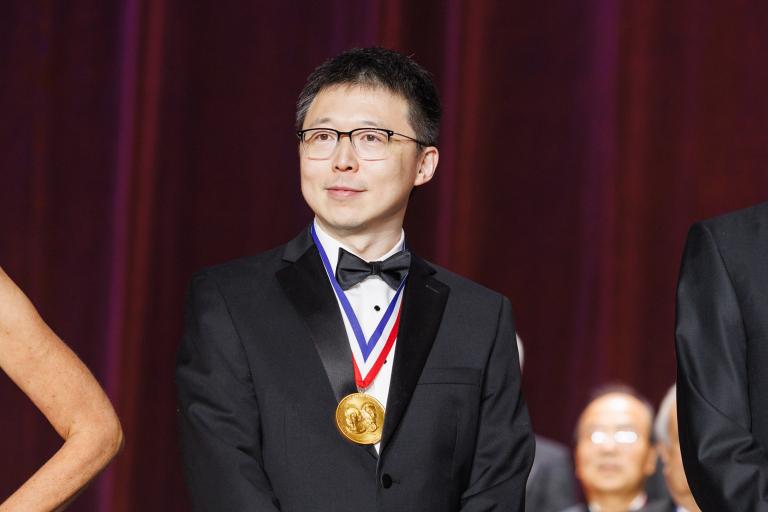
Zhang is an investigator at the Howard Hughes Medical Institute, a professor of neuroscience at MIT, an investigator at the McGovern Institute for Brain Research and a core institute member of the Broad Institute. He has received many awards, including the Gairdner Foundation International Award in 2016, the Vilcek Foundation Prize for Creative Promise in Biomedical Science in 2018, the Albany Medical Prize in 2017, the Edward Novitski Prize from the Genetics Society of America in 2021 and the 2024 National Medal of Technology and Innovation.
“I definitely want to solve more problems and bring more solutions to the world,” Zhang said. “I hope I can do that in the context of human health to allow people to live a healthier, happier, longer, more productive life, and to help more people benefit from all the exciting and great advances that have happened in the life sciences over the past 50 years.”