Who Is an Inventor Behind Humalog Insulin and Anti-obesity Peptide Drugs?
Inductee StoriesDate July 7, 2026
Est. Reading Time 7 mins
“I am a great believer that all of us are smarter than one of us,” said National Inventors Hall of Fame® Inductee Richard DiMarchi. Speaking about the importance of collaboration among people with different backgrounds and perspectives, he continued, “Nonetheless, at the end of the day, there is usually someone who has what I call the additional wrinkles on the brain that, in some way, somehow, connect things that others do not see. It allows them to envision things that other people fail to see.”
DiMarchi’s scientific contributions have been vital to the success of some of the first recombinant DNA (rDNA) derived medicines and have redefined what’s possible in helping people to lead longer, healthier lives.
Time Is Everything
Born in Brooklyn, New York, in 1952, DiMarchi learned at an early age that time is invaluable. When he was just 11, he lost his father to a heart attack. “It rests in your mind that time is of the essence, that you may be here as short a period as the 43 years he experienced,” he recalled in an interview with the National Inventors Hall of Fame®. “And while you know that it’s unlikely, it is still deeply embedded with you, and so time is priceless.”
After graduating from high school, DiMarchi used his time wisely by first enrolling at Florida Atlantic University, where he developed a strong interest in chemistry. He was particularly intrigued by the biochemistry of large molecules, and this inspired him to continue his education after earning his bachelor’s degree in 1974.
DiMarchi earned his doctorate in chemistry from Indiana University (IU) in 1979. He did his postdoctoral research at The Rockefeller University in New York City under the mentorship of Nobel laureate Bruce Merrifield, who revolutionized chemical synthesis of peptides.
Amino acids are the building blocks that assemble to a multitude of peptides in the human body to serve many vital functions. They support the immune function, digestion, cognition, metabolism and even the health of our skin, promoting elasticity and accelerating wound healing.
Changing Expectations
DiMarchi returned to Indiana in 1981 as a research scientist at Eli Lilly Research Labs in Indianapolis, where he contributed to the emerging field of biotechnology. His work predominantly focused in endocrinology and the metabolic hormones central to physiology and metabolism.
In 1982, Lilly registered Humulin®, the first rDNA drug. It is a chemical equivalent to human insulin derived from chemical semisynthesis initiating with insulin A and B chains as biosynthesized in bacteria. Humulin marked a medicinal breakthrough, but DiMarchi believed the chemistry behind the drug could be pushed beyond this initial application despite the enormous, initial preference for bio-identity with those forms found in nature.
DiMarchi soon thereafter discovered that human insulin as a drug could be enhanced by inverting the order of two amino acids to yield the active ingredient in Humalog® — a modified version of native insulin for treating diabetes. “I viewed these proteins as no different from other natural products that chemists had historically optimized,” he said. “Nature designs for physiology, and as chemists, we design for pharmacology.” Lilly launched Humalog in 1996 as the first biosynthetic protein purposefully optimized for medicinal use.
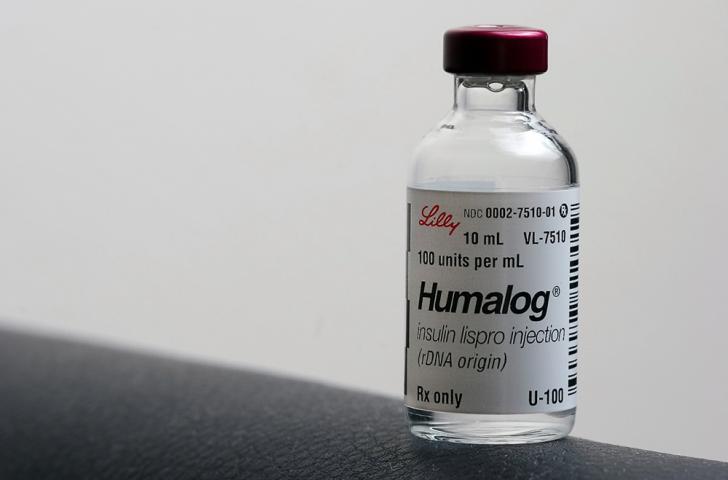
Humalog was revolutionary. It was fast-acting, it could be used closer to meals, it presented fewer potential adverse effects and it emerged as a preferred drug for treating patients with gestational (pregnancy-associated) diabetes. Humalog grew to be used daily by multiple millions of patients with diabetes, despite the initial belief that changing natural structure was a dangerous proposition. More broadly and importantly, it established a precedent that naturally sourced peptides and proteins could be chemically altered to create superior drugs. This precedent has been profoundly echoed in the transition of physiological hormones to chemically optimized analogs providing transformative management of obesity.
Following the launch of Humalog, DiMarchi continued to promote macromolecular pharmacology at Lilly, and notably the development of the peptide-based osteoporosis drug Forteo®, whose active ingredient is a peptide fragment of parathyroid hormone. He also initiated glucagon-like peptide-1 (GLP-1) research, but at the time, there was little commercial interest to pursue a drug for treating obesity, especially one that required injection. It was more than two decades before the American Medical Association landmark decision in 2013 declaring obesity to be a disease.
Improving Lives
A decade earlier, in 2003, DiMarchi left Lilly to co-found Ambrx Inc., which pioneered rDNA synthesis of therapeutic proteins with nonnatural amino acids, while simultaneously initiating academic research at IU. “At my university lab we collaboratively advanced GLP-1 pharmacology to another level, making the fundamental observation that when you integrate additional mechanisms of biological action with glucagon and GIP [gastric inhibitory polypeptide] to a single molecule, you achieve far greater metabolic efficacy,” DiMarchi said.
In 2006, DiMarchi’s IU lab spun off Marcadia Biotech Inc., a company that advanced glucagon chemistry and pharmacology. Glucagon is a peptide hormone that is commonly used as an emergency treatment for insulin overdose, to raise blood glucose. The team’s chemical advances provided the first examples of physiologically soluble analogs with full biological activity. It enabled chronic administration that demonstrated that glucagon worked well to lower body weight, without increasing blood glucose. Subsequently, when molecularly integrated with GLP-1 the team invented the first peptides that combined the characteristics of both hormones to achieve superior body weight lowering. Paradoxically, it was the chemically improved forms of the hormone that provided a new persona to glucagon, something that had remained hidden for 80 years.
“These discoveries contributed to an enlightened commercial perspective regarding obesity as a therapeutically manageable disease, and peptides as the magical drug substances,” DiMarchi explained. “Now you have a plethora of peptides with integrated hormone action exhibiting profound efficacy in type 2 diabetes, and with dramatic improvements in co-diseases beyond weight management that includes fatty liver, sleep apnea, cardiovascular disease, and the potential to address cognitive decline.”
The pioneering collaborative research led by DiMarchi and initially professor Suad Efendic, and for the last two decades professor Matthias Tschoep, provided initial demonstration of GLP-1 mediated body weight reduction in obese patients with type 2 diabetes, and a decade later the transformative performance of dual and triple agonists, as a mechanistic principle employed in drugs such as Mounjaro® and Zepbound® registered a decade later. These multiple-action peptides are transforming the management of obesity and related chronic diseases.
“I have had the great pleasure to serve at the forefront of macromolecular chemistry to discover medicines that have had a huge impact on diabetes, osteoporosis, and now obesity,” DiMarchi said. “The future is laden with opportunities to improve the quality and quantity of life, and synthetic chemistry has been integral to discovery of new mechanisms of action and the medicinal refinement to transformative drugs.”
DiMarchi continues as a distinguished professor of chemistry and Gill Chair in Biomolecular Sciences at IU. He is a member of the National Academy of Medicine, co-inventor on more than 100 U.S. patents, co-author to more than 250 peer-reviewed publications and the co-founder of eight successful biotechnology companies. He has received many honors and awards, including the 2011 American Peptide Society Bruce Merrifield Award in Peptide Sciences, the Alfred Burger Award in Medicinal Chemistry from the American Chemical Society in 2016 and the Mani L. Bhaumik Breakthrough of the Year Award from the American Association for the Advancement of Science in 2024.
See More of the Story
For an exclusive look into DiMarchi’s life and work, watch the new video created by the National Inventors Hall of Fame in partnership with the United States Patent and Trademark Office. You’ll see DiMarchi tell his inspiring story in his own words.
To uncover more stories of visionary National Inventors Hall of Fame Inductees, keep exploring our website.