Who Invented Air Conditioning?
Inductee StoriesDate June 18, 2026
Est. Reading Time 3 mins
On hot, humid days, an air conditioner can provide some welcome relief and steady comfort. If you’ve ever wondered who invented AC, the answer can be found in the National Inventors Hall of Fame®. Inductee Willis Haviland Carrier first made air conditioning possible more than 120 years ago.
A Problem-Solving Engineer
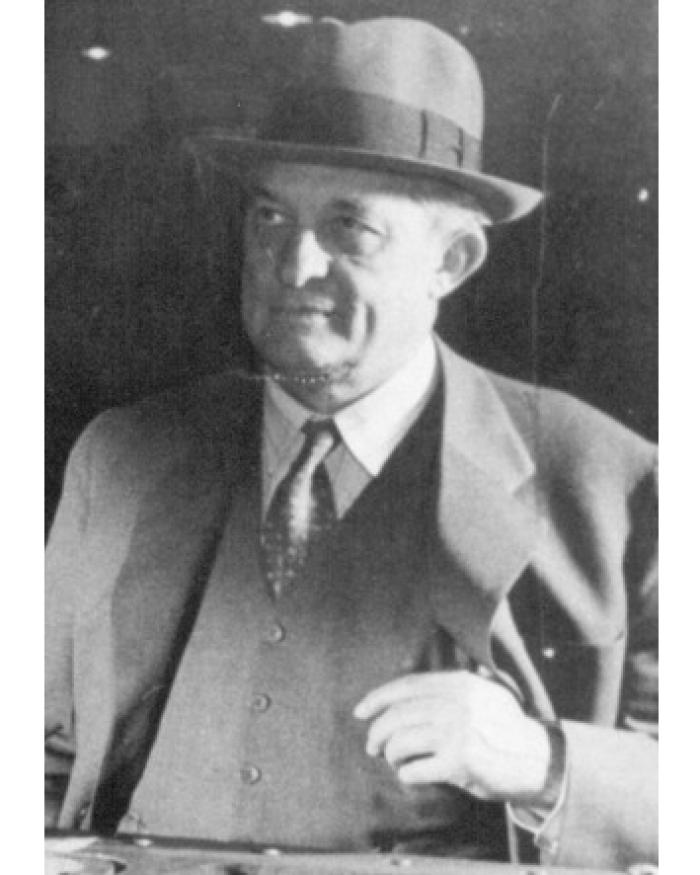
Carrier was born near Angola, New York, in 1876. He grew up on his parents’ dairy farm and got his early education in a one-room schoolhouse. His parents encouraged his curiosity, and he demonstrated that he was a natural problem solver.
Carrier attended Cornell University, where he earned a four-year scholarship. Between semesters, he worked as a door-to-door salesman. Carrier graduated with a degree in mechanical engineering in 1901, and he joined Buffalo Forge Co., a designer and manufacturer of steam engines and pumps. His first assignment was to design a heating system to dry lumber and coffee.
It wasn’t long before Carrier began conducting his own tests and experiments in an effort to improve heater design. He was so effective that his employer promoted him to the role of director of experimental engineering.
A Patent-Holding Inventor
In 1902, Buffalo Forge took on a challenge for a printing company in Brooklyn, New York. At the printing company’s plant, changes in heat and humidity had been affecting the dimensions of their paper. This led to misalignments in printing. To solve this problem, Carrier developed the first air-conditioning system.
Carrier’s new system sent air through coils filled with cold water, cooling the air while removing moisture at the same time. By controlling both temperature and humidity, his system created the stable environment the printing company needed to complete high-quality, four-color printing.
In 1906, following research and field testing, Carrier patented his air-conditioning device. He correctly predicted that it would be used not only to improve industrial processes and products, but to keep people comfortable. In 1911, he disclosed to the American Society of Mechanical Engineers his basic "Rational Psychrometric Formulae" — which still stand as the basis for all fundamental calculations in the air conditioning industry.
A Leader in Air Conditioning
When Buffalo Forge stopped its research and development to focus entirely on manufacturing, Carrier and six other engineers invested their combined life savings of $35,000 to form the Carrier Engineering Corp. in 1915. Later called Carrier Corp., it is still a leading name in air conditioning, as well as heating and refrigeration solutions.
Success was swift for the new company as Carrier and his fellow engineers continued to design and manufacture new air-conditioning units. As these units increased in capacity, they could cool larger and larger spaces. In addition, the company began producing home air-conditioning units. In the 1920s, the substantial population migration to the “Sun Belt” in the southeastern U.S. was made possible by the availability of home air conditioning.
In 1933, Carrier introduced an air conditioner that used a belt-driven condensing unit and blower, mechanical controls and an evaporator coil. This became the primary model for air-conditioning systems in a rapidly growing market.
While modern air conditioners include advancements in materials, vapor compression, electronic sensors, diagnostics and controls, and energy efficiency, they operate on the same fundamental principles and technology Carrier developed about a century ago. It’s no wonder that in 1998, Carrier was named one of Time Magazine's "100 Most Influential People of the 20th Century.”
Meet More Icons of Invention
Carrier is one of nearly 700 inventors who have been inducted into the National Inventors Hall of Fame so far. To learn more of their stories, keep exploring our website. To tell us who should become the next Inductee, make a nomination!