Simple STEM Experiments on a Budget
STEM Activities Trends in STEMDate August 13, 2026
Est. Reading Time 3 mins
Sometimes we think of STEM learning as trying the latest technology or taking trips to explore fantastic ecosystems, but STEM is all around us every day. From practicing math in the kitchen to observing backyard creatures and setting up at-home experiments with simple supplies, the best thing about STEM is how practical and accessible the lessons are to each of us! Keep reading to uncover five activities to try with your family using materials you likely already have around your house.
1. Get Groovy With Your Own Lava Lamp
What’s cooler than colorful chemical reactions? The Minnesota Children’s Museum shows you how to create your own temporary, customized lava lamp in two ways. Add to the fun with color science by using unique food coloring combinations or glitter to personalize your lava lamp. If you try both recipes, compare the two to determine how unique ingredients change the results!
2. Combine Art and STEM With DIY Chalk
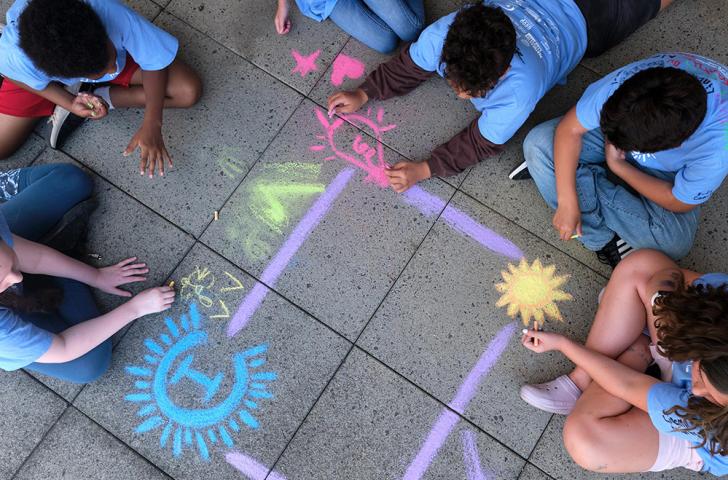
Mix, mold and create with everyday kitchen items turned into tools for creativity. Homemade chalk holds endless possibilities for design and an opportunity to witness science in action by turning liquids into solids! With basic items like eggshells, flour and food coloring, you can bring vibrancy to sidewalks everywhere. Follow this step-by-step instruction guide to make your own, uncover the science behind your creation and become acquainted with an awesome inventor!
3. Investigate an Ice Volcano From Your Kitchen
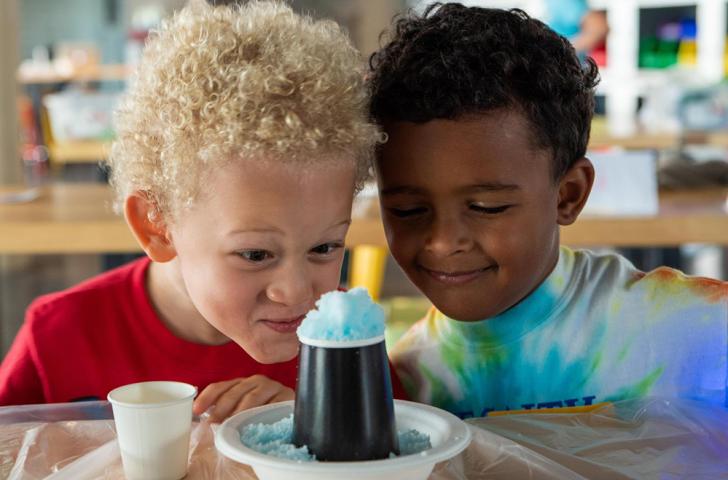
The Hubble Telescope captured evidence for the possible existence of an ice volcano – known as a cryovolcano – erupting on Europa, one of Jupiter’s 79 moons. Luckily, you don’t have to blast off into space to explore your own frozen volcano. All you need are common household materials and these simple instructions! From changes in matter to chemical reactions, you’ll explore several examples of chemistry and math with this one awesome experiment.
4. Make an Aquarium With Dry Erase Markers
Do you have a glass pie plate, dry erase markers and water? Then you could create your own floating aquarium, all while learning about density! Use dry erase markers to draw sea creatures on your glass pie plate. Get as creative as you’d like with connected outlines of dolphins, fish, octopi, coral, kelp or anything else you’d hope to see on a deep-sea dive! After you finish your masterpiece and let it dry, follow Good Housekeeping’s instructions to slowly pour water across the bottom until your drawings begin to rise. You’ll see that the dry erase marker is released from the glass dish and will not dissolve. Because it’s less dense than the surrounding water, it also will float!
5. Pop(corn) Into Science
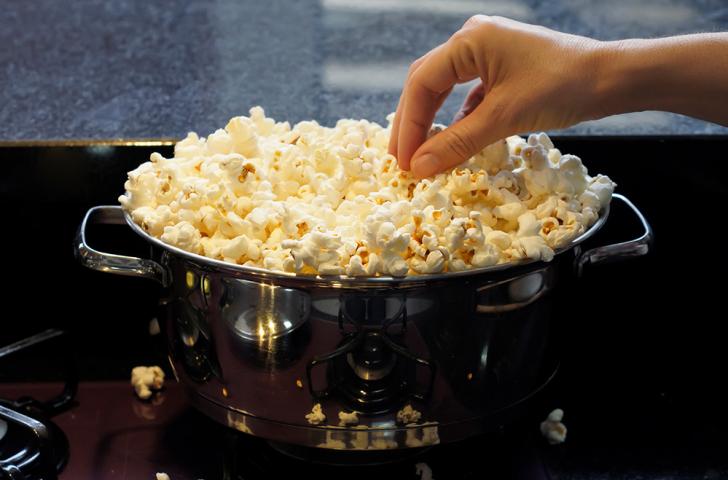
Did you know that corn is one of the primary crops planted in the United States? It’s also incredibly versatile. Corn is used for food and livestock feed, and it’s even a component in some fuels. You can complete an easy and delicious experiment to practice the power of decision-making using one of our favorite corn products – popcorn! Follow these instructions and learn about impactful food scientists who have shaped the way we cook and store food.
Never Stop Exploring
Keep an eye on our blog for more free or low-cost ways to bring STEM learning to life for your young innovator!